Working Papers

Ray of Hope? China and the Rise of Solar Energy
with Ignacio Banares-Sanchez, Robin Burgess, David Laszlo, Pol Simpson, and John Van Reenen
Revise and Resubmit, The Quarterly Journal of Economics
Working Paper;
VoxDev;
VoxEU;
VoxChina
Abstract
Do industrial policies that promote clean energy offer a ray of hope—raising a country's growth and welfare while simultaneously reducing carbon emissions? We study the impact of Chinese solar subsidies, whose implementation across city‑regions coincided with a massive expansion of the sector and a dramatic fall in global solar prices. We construct new city‑ and firm‑level panel data on solar policies, patenting, and output. Using synthetic difference‑in‑differences for 2004–2020, we find that production and innovation subsidies were more effective than demand‑side installation subsidies in generating large and persistent increases in local innovation, net entry, production, and exports. Demand‑side policies did, however, reduce local pollution. To examine aggregate effects, we build and structurally estimate a quantitative spatial model with endogenous innovation and heterogeneous productivity across firms and cities, incorporating business stealing and knowledge spillovers. Counterfactual analysis shows that: (i) local effects remain substantial at the macro level, explaining 40–50 percent of the aggregate changes in solar innovation, prices, and revenues; (ii) the social benefits to Chinese citizens exceed subsidy costs by 65 percent (and roughly double when environmental benefits are included); and (iii) although all subsidy types increase welfare, innovation subsidies are the most cost‑effective.
Government and Nature: Evidence from the Distribution of Flood Damages in China
with Yuxiao Hu and Runhong Ma
Reject and Resubmit, The Review of Economics and Statistics
Abstract
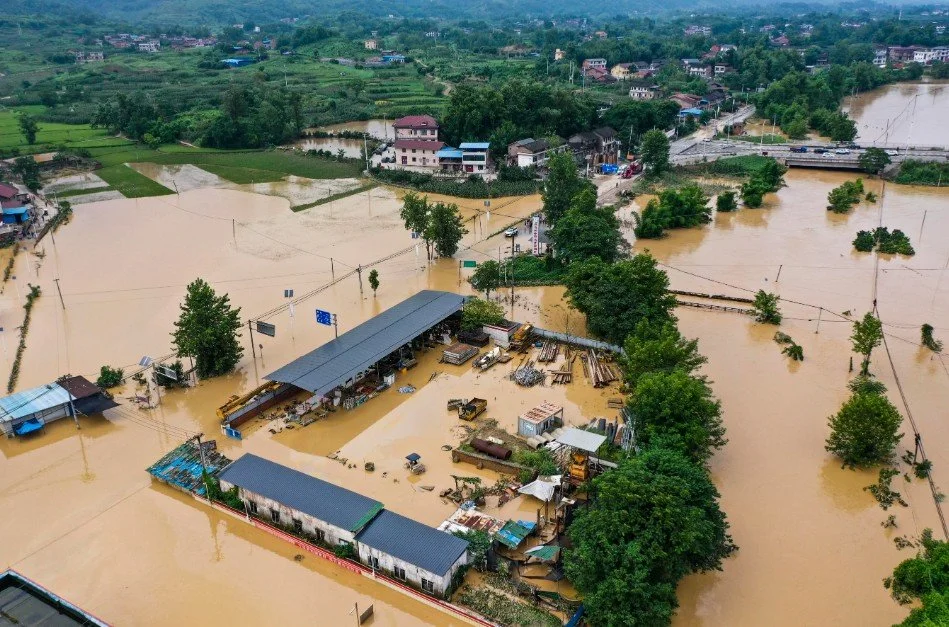
Can governments address climate threats by deliberately redistributing damages across space? We study the world's largest flood-damage reallocation program, the Flood Detention Basin (FDB) policy in China, which designates over 30,000 km² of rural land as temporary flood storage zones to protect downstream cities during severe floods. Combining a difference-in-differences design with a spatial general equilibrium model, we quantify both local and aggregate effects. FDB policy causes persistent local economic losses in FDB-designated counties: an 11 percent decline in firm entry and a 10 percent reduction in nighttime light intensity. Using a spatial model with trade linkages among FDB-designated counties, FDB-protected cities, and other regions, we find that the policy increases total output by 0.24 percent (approximately 15 billion USD). When migration frictions are relaxed, aggregate gains double but inequality between rural FDB areas and protected cities widens. Our results reveal the trade-off between efficiency and equity in deliberate damage reallocation.
Weathering Poverty
with Clare Balboni, Oriana Bandiera, Robin Burgess, Anton Heil, Clément Mazet-Sonilhac and Munshi Sulaiman
Abstract
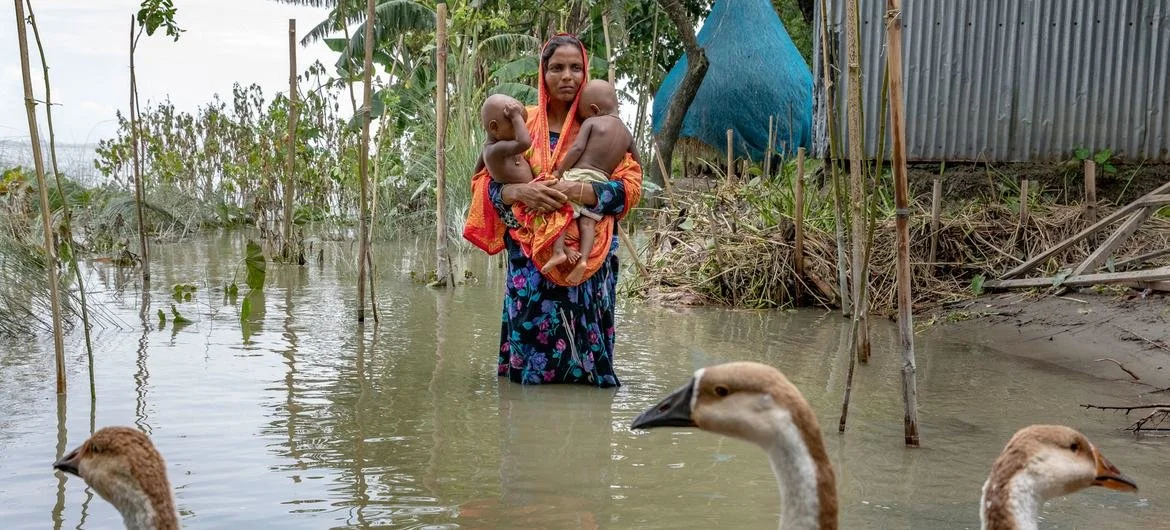
The global overlap between poverty and climate damages raises the question of whether poverty amplifies vulnerability to weather shocks. Combining high-resolution satellite measures of droughts and floods with household panel data from Bangladesh, we study settings where some households are lifted out of poverty through BRAC's graduation program. In control areas, the poorest households experience the largest consumption losses following unpredictable weather shocks; in treated areas, they do not. The difference arises because, in control areas, monopsonistic landlords can pass weather-induced income shocks onto casual laborers — the poor's only employment option. In treated areas, by contrast, program beneficiaries diversify their labor supply, increasing its elasticity and limiting landlords' ability to shift shocks onto workers.